AI has upended traditional educational assessment, such as standardized tests and essays. Teachers are grappling with how to measure what students have learned when AI platforms may have been used to craft essays or solve math problems. At the same time, AI is presenting new capabilities for assessment, from parsing vast amounts of data to personalizing tests.
A new white paper from the Stanford Accelerator for Learning, in collaboration with ETS, one of the world’s largest educational testing organizations, examines these issues and more. “Responsible Assessment in the AI Era: Key Insights from a Future-Focused Convening” provides recommendations for researchers, developers, education system leaders, and philanthropists seeking to create more effective assessments in the AI era.
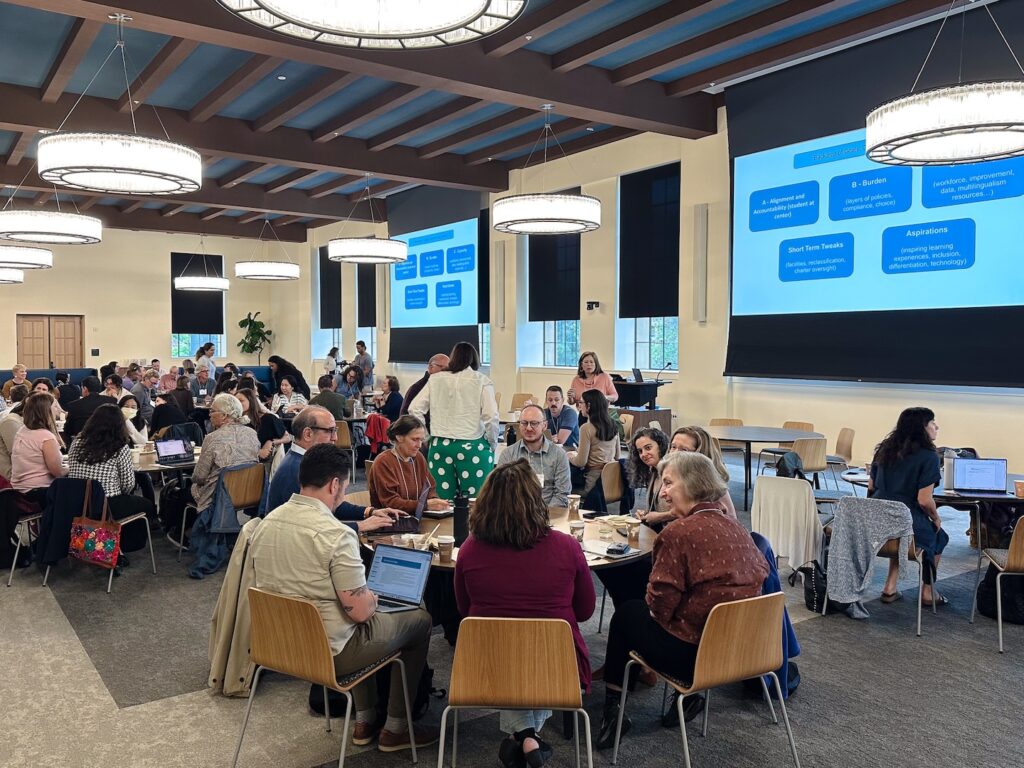
The paper is the result of a conference, which took place at Stanford earlier this year and brought together over 100 education, research, technology, and policy leaders to advance the science and practice of responsible assessment in the age of AI.
As AI changes how students learn, how teachers teach, and what learners need to know, the group aimed to reimagine how assessment can support equity, innovation, and continuous improvement across K–12, higher education, the workforce, and research.
The event and white paper were led by Associate Professor Candace Thille, faculty director of the Adult and Workforce Learning initiative at the Accelerator. Thille also serves on the board of trustees of ETS.
“I recognized that I was working with two different groups, my faculty colleagues at Stanford and my trustee colleagues at ETS, and both groups were thinking very deeply about how we shape AI to inform and improve assessment,” she said. “And I thought, we need to get these people together…to engage in a discussion: how do we shape the current moment?”
Key insights from the white paper include:
- AI is changing what is assessed. As AI becomes embedded in teaching and learning, assessments based primarily on final products may no longer capture the knowledge and skills they were designed to measure.
- AI is changing how learning is assessed. AI enables new forms of evidence that make it possible to assess learning more continuously, authentically, and comprehensively. Assessment must evolve to measure not only what learners know, but also how they think, create, collaborate, and apply durable skills such as critical thinking, creativity, adaptability, ethical judgment, and AI literacy.
- Assessment should better reflect how learning actually happens. Learning is continuous and contextual. Assessment should move beyond isolated testing events toward continuous systems of evidence that capture growth over time and across contexts. Emerging approaches, including portfolios, formative feedback, conversation-based assessments, authentic performance tasks, and competency demonstrations, offer richer evidence of learning than a single test score.
- Responsible assessment requires responsible AI and shared leadership. AI creates powerful new opportunities to improve assessment, but trust depends on validity, fairness, transparency, and meaningful human oversight. Advancing responsible assessment will require coordinated action among educators, researchers, developers, policymakers, and funders to ensure that AI supports learning while keeping humans accountable for high-stakes decisions.
“Traditional assessments may tell us if a student arrived at a correct answer,” Millie Garcia, Chancellor of California State University, said at the event. “But they often tell us little about how [students] got there. In today’s collaborative digital and increasingly AI-supported communities, that gap matters.”
What skills are measured also matters, the authors argue. At job sites, the paper notes, “assessment should focus on which skills workers will need to succeed in changing work environments” rather than a current role.
"We're all here because we care about the future of education,” Amit Sevak, CEO of ETS, said during the event. “And this question of how we measure the outcomes around that is really what today's conversation is all about."