Every era of technological transformation brings the same urgent questions: What happens to jobs and the people who hold them? What does it mean for those just beginning their careers? Today, AI is forcing us to confront these questions again, and with even greater urgency.
To address them, Jobs For the Future (JFF), Stanford Digital Economy Lab, the Stanford Accelerator for Learning, and the Stanford Center on Longevity convened leaders across education, philanthropy, industry, and government to design strategies to help early-career workers access quality jobs and advance their careers in the age of AI. A key emphasis for the day was on cross-sector collaboration.
Canaries
Researchers from Stanford’s Digital Economy Lab provided insight into data that laid the foundation for the rest of the day. Erik Brynjolfsson, faculty director at the Stanford Digital Economy Lab, Bharat Chandar, postdoctoral fellow, and Ruyu Chen, research scientist, presented evidence that showed AI’s impact on early-career labor markets, where findings diverge, and what remains genuinely uncertain. Their study, “Canaries in the Coal Mine? Six Facts about the Recent Employment Effects of Artificial Intelligence,” drew on ADP payroll data covering millions of workers to try and reveal the effects that AI is having on entry-level hiring. They found that AI is beginning to have a significant and disproportionate impact on entry-level workers in the national labor market. Roles with the greatest AI-exposure, such as software development and customer service, face the steepest disruption, with college-educated early-career workers bearing a disproportionate share of that impact, according to the research.
Young workers in “AI-exposed” roles have seen a 16% relative decline in employment, with entry-level hiring slowing most severely for roles where AI automates rather than augments. The research introduces a distinction that expands on this claim: the difference between codified knowledge (the book-learning, the digitized data, the things AI can read and replicate) and tacit knowledge (the judgment of a manager, the intuition of a therapist, the kind of wisdom that accumulates with experience and are never digitized), with codified knowledge being the likely victim of automation by AI and tacit knowledge being the irreplaceable humanness that AI is not capable of replicating. The researchers emphasized focusing on the development of tacit knowledge in early-career workers to ensure they maintain the skills that cannot be automated away.
Brynjolfsson, Chandar, and Chen were careful to say that this data merely captures a moment, not a destiny. "We need to have humility in what we know and what we will know in the future," said Chandar.
“Not Magic, But Looks Like Magic”
Tod Loofbourrow, chair emeritus of JFF, opened the first session saying he believes that no one is quite sure “how to change work” in the face of a technology that is “not magic, but looks like magic.” While society has adapted to technological disruptions before, AI-driven disruptions threaten to leave early-career workers behind—if we don’t adapt quickly enough. However, rapid adoption of the new technologies also presents challenges. Ben Pring, vice president of the Center for AI and Future of Work at JFF, called AI’s rapid development a “code red,” where markets are revaluing human intelligence and the pace of change has outrun our capacity to respond, demanding systemic redesign rather than incremental fixes.
Global Competitiveness
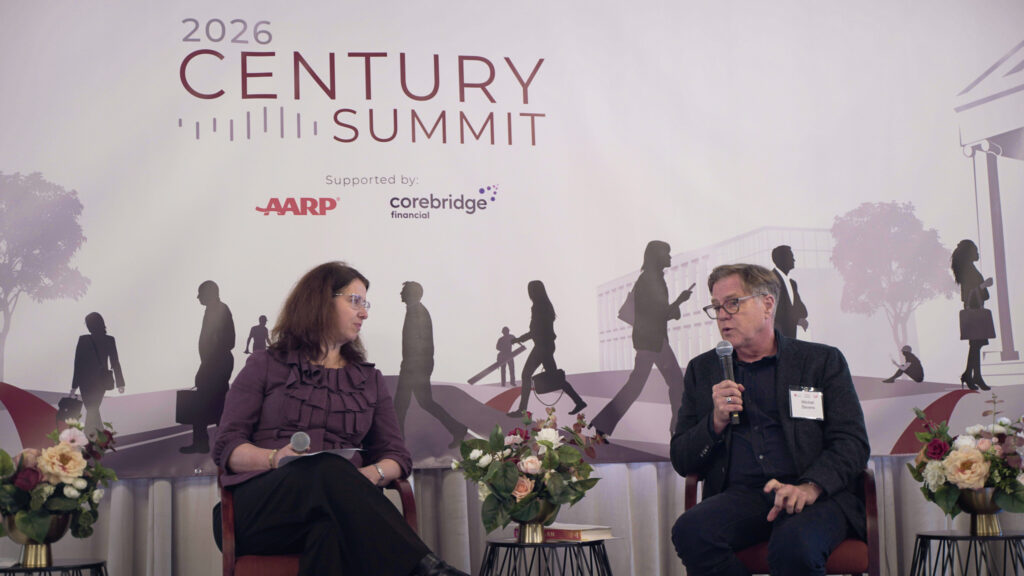
The day’s keynote was an open dialogue between Hoover Institution Director and former US Secretary of State Condoleezza Rice, and Stanford Accelerator for Learning Executive Director Isabelle Hau. Their conversation explored the national, economic, and civic stakes of AI for early-career workers. Rice reflected on how this technological inflection point may reshape opportunity, mobility, and democratic stability, as well as what leadership demands at this moment. She emphasized that while the U.S. holds a strong lead in AI innovation, it is falling behind on adoption and diffusion due to the decentralization of our education system and a lack of coordinated policy. Rice identified three tiers of talent that currently need investment: talent innovators, talent infrastructure, and the general workforce. Rice called on companies to take responsibility for training and helping workers use AI: “Don’t abandon the people who you will need for talent,” she said. “Train people to be pliable.”
Perhaps Rice’s sharpest reflection was on the doomsday narratives that surround the technology at present. “AI does 3 things: It takes your jobs. It runs up your electricity bills. Pretty soon, it’s going to destroy humanity. This is the narrative now and we have to be determined to push that narrative aside because we’ll end up missing a lot of opportunities,” she said. The goal should be making people better users of AI, not casualties of it. This means investing in reskilling workers with deep, transferable skills; demanding that governments, industries, and higher education come together to form a new social contract.
Innovation Showcase & Discussion
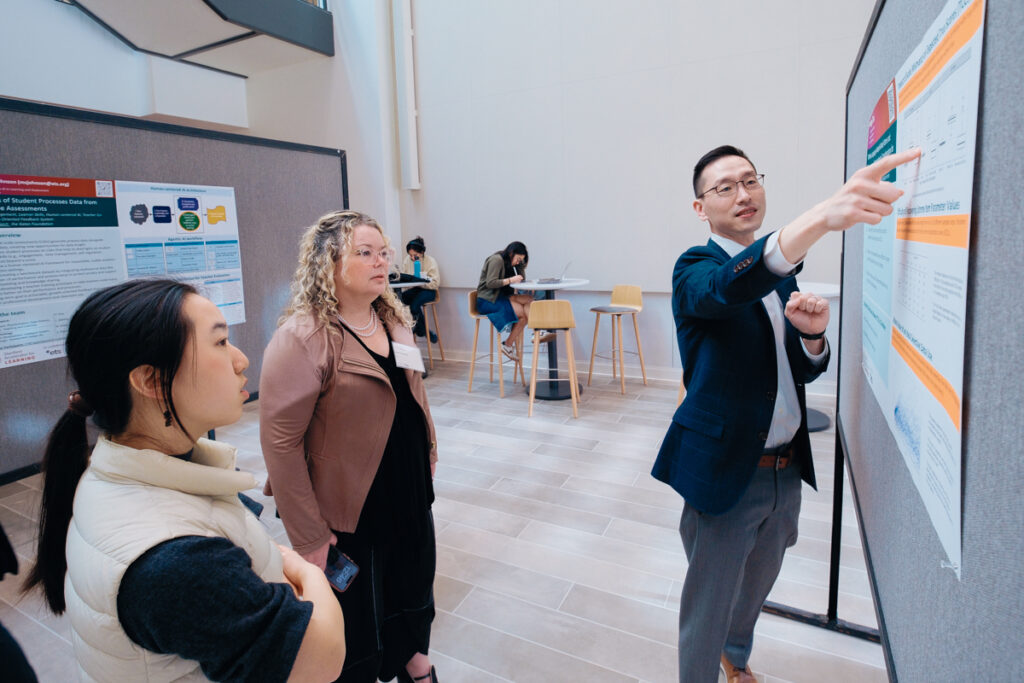
The most hands-on portion of the day came when three pilot-funded projects from JFF’s Advancing AI-Resilient Early-Career Pathways grantee cohort shared early stage ideas and gathered real-time feedback from the audience.
The three innovations – FourOne Insights, Wayground (formerly Quizziz), and Pursuit – each proposed a distinct tool or model designed to support and strengthen early-career workers in an AI-transformed economy.
The session unfolded as a structured feedback exercise, with attendees split across tables and rooms and project leads circulating to gather feedback on their ideas. Conversations centered on viability, scalability, and outcomes while consistently returning to the core question: What value could each bring to early-career workers in an AI-transformed labor market while ensuring AI leads to quality jobs?
The animating theme of this session was collaboration and a collective commitment to thinking rigorously about what early-career workers actually need. With an emphasis on creating genuine dialogue and grounding ideas with seriousness and meaning.
AI as a Sputnik Moment
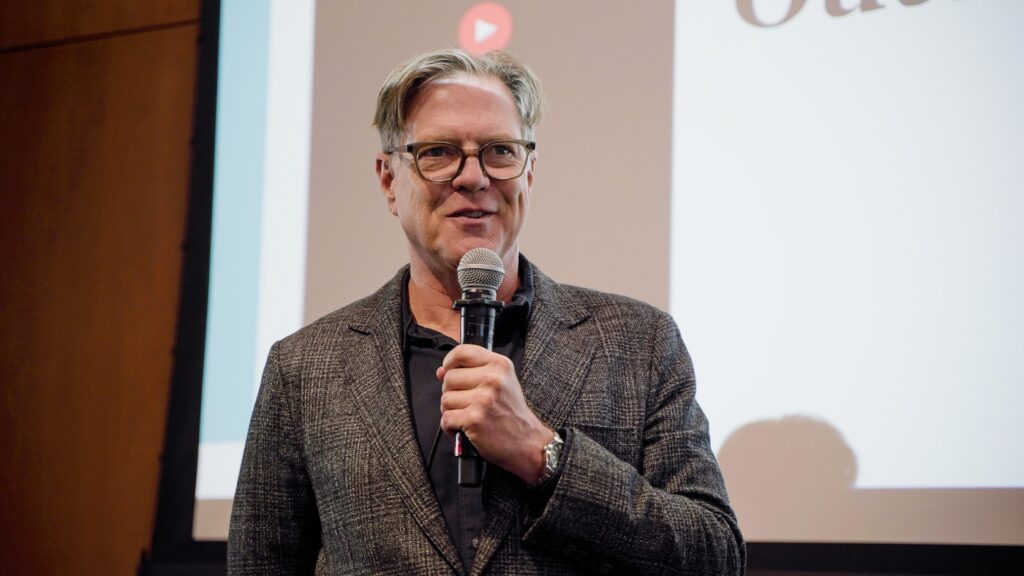
The day rounded out with Mitchell Stevens, professor of education at Stanford and faculty affiliate of the Accelerator, sharing the thesis of the Learning Society and identifying concrete actions to support early-career workers. He likened the current state of AI to Sputnik in 1957. The US national response was decades of investment in education, science, and human capital. Stevens argued that AI represents a similar kind of technological disruption that requires comparable investment in people.
To get there, Stevens stressed the need for cross-sector collaboration with a speed and scale that siloed action will simply not achieve. Philanthropists, employers, school officials, and government leaders, each hold a different piece of the capacity and wisdom that investment will require.
This story was originally published by Learning Society.