
Overview
Community, and the integral role it plays in equity work at Stanford and beyond, is at the foundation of the Accelerator’s Equity in Learning Initiative.
To bring the community and Stanford closer together, the initiative established the Distinguished Practitioners in Residence (DPIR) program in 2024. The purpose of this program is to cultivate intergenerational dialogue between community educators and Stanford students, staff, faculty, and alumni. DPIRs include community scholars who have been engaged in equity work in education on the peninsula and/or throughout the greater Bay Area.
Faculty lead

Maisha T. Winn
Faculty Director, Equity in Learning Initiative
Current practitioners in residence
-
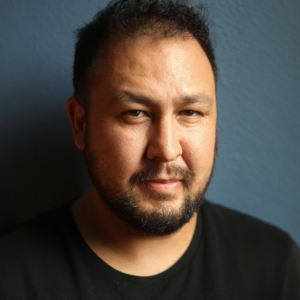
Ben Hamamoto
Ben Hamamoto is a researcher, writer, and educator whose work bridges cultural analysis, community history, and futures thinking. As a Research Director at the Institute for the Future (IFTF), Ben both practices and teaches strategic foresight. His work at IFTF includes community-based foresight research on the impact of climate change on low-income Californians and forecasts of emerging approaches to knowledge mobilization for education networks. Ben began his career in journalism and filmmaking and served as the editor of Nikkei Heritage, the official magazine of the National Japanese American Historical Society. He continues to work in community media, writing articles and producing video for Nichi Bei Weekly, covering Asian American history, arts, activism and pop culture.
-

Lyn Jeffrey
Lyn Jeffery leads the Foresight Essentials program at the Institute for the Future (IFTF), supporting people, organizations, and communities to develop their own foresight capacities. A cultural anthropologist and an IFTF Distinguished Fellow, Lyn explores how people make sense of the rapidly changing world around them, whether a community college student mapping a meaningful employment path, a leader in a multinational organization developing their own futures thinking skills, or an amateur musician experimenting with AI. Before joining IFTF, Lyn worked in China as a tour guide, nonprofit researcher, Fulbright scholar, and television producer. Lyn has enduring interests in learning experience design, mobility, social media, collaborative technologies. She holds a BA in Chinese Studies and a Ph.D. in Anthropology from the University of California, Santa Cruz.
Former practitioners in residence
-

Aditi Goel
A Tequity DPIR from 2025–2026, Aditi Goel brings over 20 years of nonprofit and education expertise to the work of solving critical problems around equity and opportunity. The unique multi-sector experience Goel has from her leadership at Google where she designed and launched CodeNext, leading the education policy and program portfolio at the Silicon Valley Leadership Group, supporting large-scale research at WestEd, and as a Teach for America teacher enables her to now provide strategic advisory services through P16 Partners for clients across school systems and the philanthropic, education, nonprofit and ed tech sectors. Goel serves as a Board Member for Teach for America – Bay Area, and advisory board member for Challenge Success and Education Reimagined. Goel holds a B.A. in Philosophy with a Minor in South Asian Studies from UC Berkeley and an Ed.M. in Education Policy & Management from Harvard University.
-
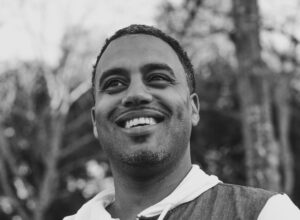
Olatunde Sobomehin
A Tequity DPIR from 2025–2026, Olatunde Sobomehin has a lifelong commitment to youth and community development. A native of Portland, Oregon, Olatunde grew up in a family dedicated public service and eventually carried that lens to Stanford University, where he he majored in Urban Studies, led a public speaking class in the Engineering department, and played on the top 25 Men’s Basketball Team, where he was also voted Most Inspirational Player (2003). In 2014, Olatunde co-founded StreetCode Academy, and has remained CEO since. He is responsible for crafting and carrying the vision alongside board, staff, and key partners. Most recently, his work in tech education and community building has earned him recognition as a 2018 Aspen Institute Scholar, a 2019 Praxis Fellow, and a 2020 Social Entrepreneurship Fellow at Stanford University.
-
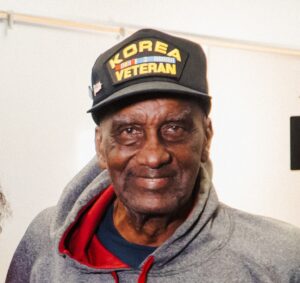
Robert Hoover
The founding DPIR, Robert “Bob” Hoover, was the Inaugural President of the Nairobi College in East Palo Alto (1969). His role as DPIR centered on the theme of grounding equity work in historical context. He is currently the director of the SWAG Program at Live In Peace, a nonprofit that supports young people in East Palo Alto through coaching, counseling, tutoring and mentorship.